2026 Top Trends in Industrial Oven Belt Innovation and Technology?
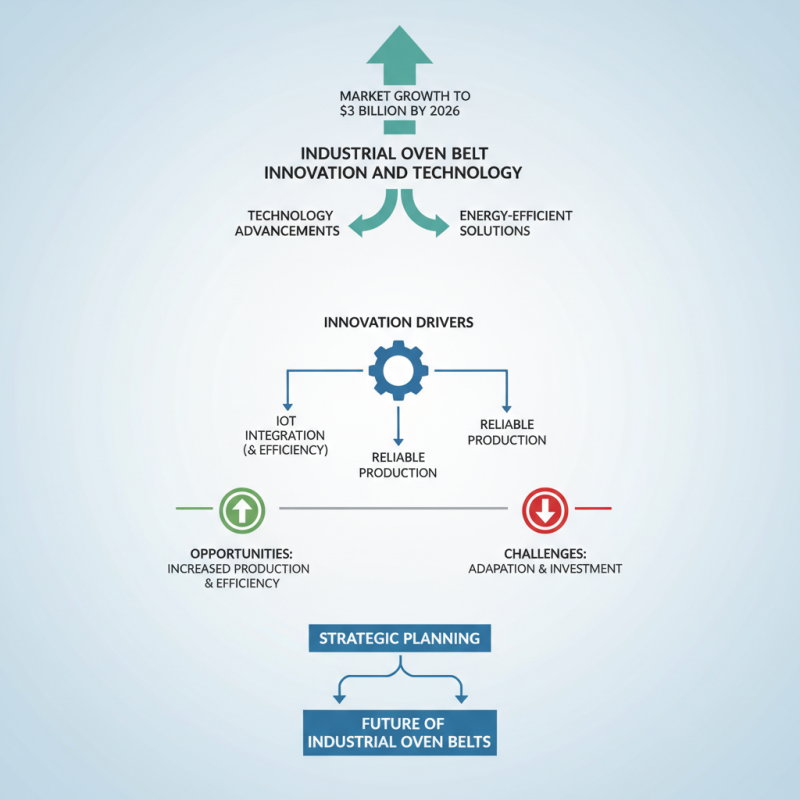
In the rapidly evolving landscape of manufacturing, the Industrial Oven Belt sector plays a pivotal role. According to a recent report from Global Industrial Insights, the market for Industrial Oven Belts is projected to reach $2 billion by 2026. This growth is driven by advancements in technology and increasing demand for energy-efficient solutions.
John Morrison, an expert in industrial heating technologies, notes, "Innovation in the Industrial Oven Belt industry is key to meeting modern manufacturing demands." His insights highlight the urgency for manufacturers to adapt to new trends. Furthermore, the integration of IoT applications in industrial ovens is set to revolutionize monitoring and efficiency.
The upcoming trends in this sector reveal both opportunities and challenges. As companies seek to enhance production, the need for reliable and innovative Industrial Oven Belts becomes critical. Industry leaders must prioritize research and development. However, some organizations may struggle to stay ahead amidst rapid technological changes. This delicate balance underscores the importance of strategic planning in harnessing the future of Industrial Oven Belt technologies.
Emerging Materials in Industrial Oven Belt Design: A 2026 Overview
The design of industrial oven belts is undergoing a significant transformation with the introduction of new materials. In 2026, we are seeing a shift towards high-performance composites that offer enhanced durability and thermal resistance. These materials can withstand extreme temperatures, making them ideal for continuous use in demanding environments. Advances in polymer technology also lead to lighter and more flexible belt options.
Innovations include the incorporation of ceramic coatings, which improve the surface properties of the belts. This results in better release characteristics, reducing product stickiness during processing. The challenge lies in balancing durability with flexibility. Some businesses report early issues with material brittleness under certain conditions.
Environmental considerations are shaping material choices as well. Sustainable materials are gaining traction in the industry. However, sourcing and producing these materials remain complex. Companies are working to ensure that their innovations not only meet performance standards but also contribute positively to ecological footprints. There is room for improvement as companies navigate these emerging trends in industrial oven belt design.
2026 Top Trends in Industrial Oven Belt Innovation and Technology
| Trend |
Description |
Emerging Material |
Potential Benefits |
| Advanced Heat Distribution |
Innovations in belt design to ensure more uniform heat transfer. |
Ceramic Composites |
Improved product quality and energy efficiency. |
| High-Temperature Resistance |
Belt materials capable of withstanding extreme temperatures. |
Silicone-Infused Fibers |
Longer lifespan and reduced maintenance costs. |
| Sustainability Initiatives |
Focus on eco-friendly and recyclable materials in belt production. |
Biodegradable Polymers |
Reduced environmental impact and compliance with regulations. |
| Smart Technology Integration |
Incorporation of IoT devices for real-time monitoring. |
Conductive Polymers |
Enhanced operational efficiency and predictive maintenance. |
| Customizable Belts |
Tailored solutions to meet specific production needs. |
Reinforced Textiles |
Greater adaptability and improved performance. |
Advancements in Temperature Control Technology for Oven Belts
Temperature control is crucial in industrial oven operations. Innovations in technology are improving how these systems maintain consistency. Precise temperature regulation leads to better product quality. It reduces energy waste and optimizes production time. Advanced sensors now offer real-time data. This allows operators to adjust settings instantly.
New control algorithms are enhancing responsiveness in temperature management. They analyze data quickly, predicting fluctuations before they occur. A refined approach helps to maintain uniform heat distribution. However, integrating these technologies presents challenges. Not all facilities can afford the latest systems. Older equipment may struggle to adapt, requiring significant upgrades.
Furthermore, staff training remains essential. Workers must understand these advanced systems. Without proper knowledge, even the best technology can underperform. Maintaining reliability in temperature control is a continual process. It’s important to evaluate how well these advancements meet industry needs. Balancing cost and efficiency is a persistent concern for many manufacturers.
Sustainability Trends: Eco-Friendly Innovations in Oven Belt Production
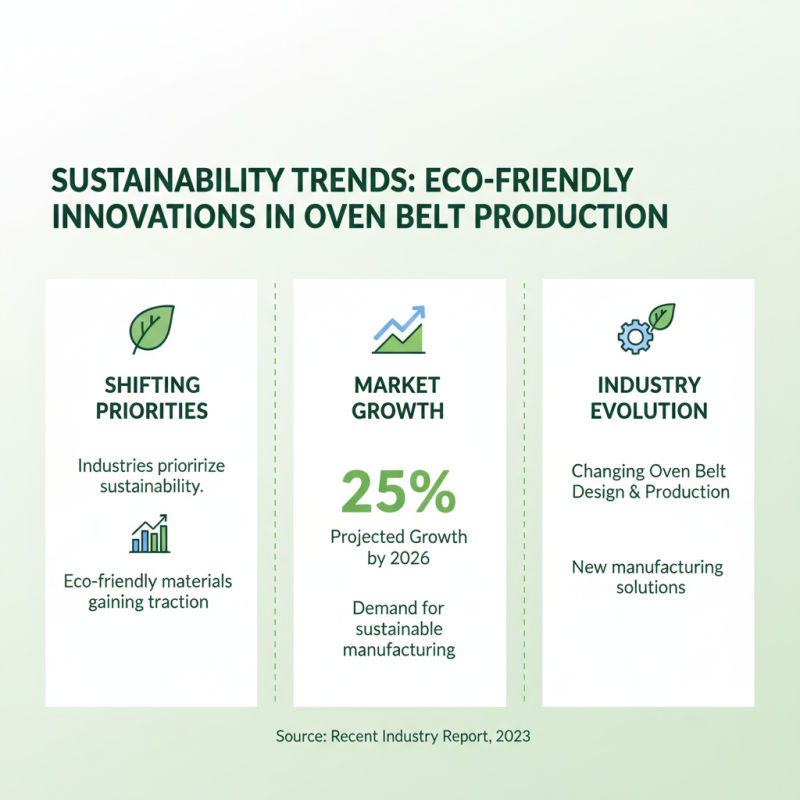
As industries increasingly prioritize sustainability, innovations in oven belt production are evolving rapidly. Eco-friendly materials are gaining traction. According to a recent report, the demand for sustainable manufacturing solutions in the industrial sector is projected to grow by 25% by 2026. This movement is changing how oven belts are designed and produced.
Recyclable materials are now being utilized, making oven belts more sustainable. Many manufacturers are experimenting with bioplastics and natural fibers. These materials can reduce dependency on fossil fuels. A study published in the "Journal of Sustainable Manufacturing" reported a 40% reduction in environmental impact by using eco-friendly materials for oven belts.
However, the transition isn't flawless. Many current production processes still rely on traditional methods, raising concerns about overall effectiveness. While the shift toward sustainability is encouraging, equipment compatibility and reliability remain critical issues. The industry must find ways to enhance performance while adopting these materials. Balancing sustainability and functionality is a challenge that requires more attention and technological innovation.
Integration of IoT and Automation in Industrial Oven Belt Systems
The integration of IoT and automation in industrial oven belt systems is reshaping the industry landscape. Manufacturers increasingly use smart sensors to monitor temperature, humidity, and air flow. This real-time data feedback allows for prompt adjustments that enhance product quality and consistency. For instance, a malfunctioning belt can be detected immediately, reducing downtime and preventing costly mistakes.
Moreover, automated systems are streamlining operations, making human oversight less critical. However, this shift raises concerns about reliability and maintenance. Over-reliance on technology can lead to skill gaps among operatives. Training is essential to ensure that staff can troubleshoot issues that automation cannot resolve. The challenge lies in balancing automation with human expertise to leverage the best of both worlds.
As companies dive deeper into this tech integration, they must also address cybersecurity risks. Protecting critical data from potential breaches is paramount. This landscape will continue to evolve, posing both opportunities and challenges. Continuous evaluation of systems will ensure that the benefits outweigh the drawbacks in this fast-paced environment.
Predictive Maintenance and its Impact on Oven Belt Performance in 2026
Predictive maintenance is revolutionizing the performance of industrial oven belts. By closely monitoring equipment, manufacturers can anticipate issues before they arise. This proactive approach helps reduce downtime and enhances operational efficiency. The integration of IoT devices allows for constant data collection, providing insights into oven belt wear and tear.
Implementing predictive maintenance does have its challenges. Not all companies have the resources to adopt advanced technology. Staff training is essential to interpret data effectively. Some organizations might struggle to implement these systems, as they require a cultural shift towards data-driven decision-making.
Yet, the benefits can be significant. Reduced maintenance costs are just the beginning. Enhanced performance leads to better product quality. As each year progresses, companies that embrace this innovation are likely to see improvements. Accurate predictions can guide timely interventions, thus prolonging the lifespan of oven belts and ensuring smoother operations.