What is the Best Oven Mesh Belt for 2026?
In the rapidly evolving baking industry, choosing the right Oven Mesh Belt is crucial for efficiency and product quality. Industry expert Julia Harmon states, "The right mesh belt can significantly impact your production flow." This statement highlights the vital role that Oven Mesh Belts play in food processing and baking.
As we look toward 2026, the market is flooded with options. However, not all Oven Mesh Belts are created equal. Materials, durability, and mesh size can vary significantly. Each choice can affect cooking times, heat distribution, and even the final texture of baked goods. While many manufacturers claim to provide the best, it requires deep analysis to find the ideal fit for specific needs.
Some belts may promise high performance, but flaws often reveal themselves over time. Users may encounter wear and tear that seems negligible at first. These issues may lead to costly production delays later. Thus, businesses must evaluate their choices carefully. A good Oven Mesh Belt is not just about immediate results but long-term reliability.
Overview of Oven Mesh Belt Types for Industrial Use
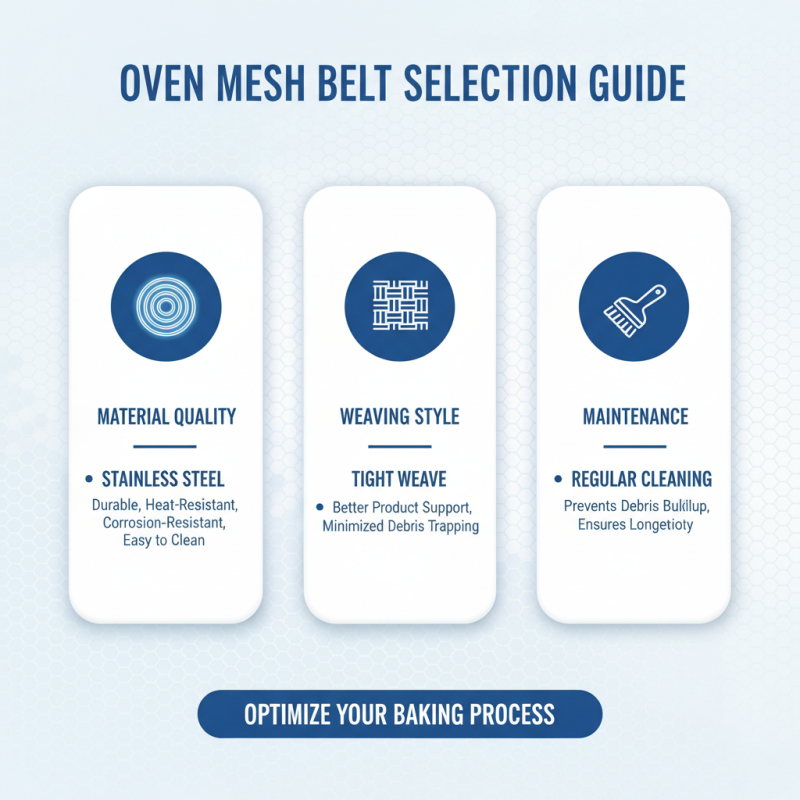
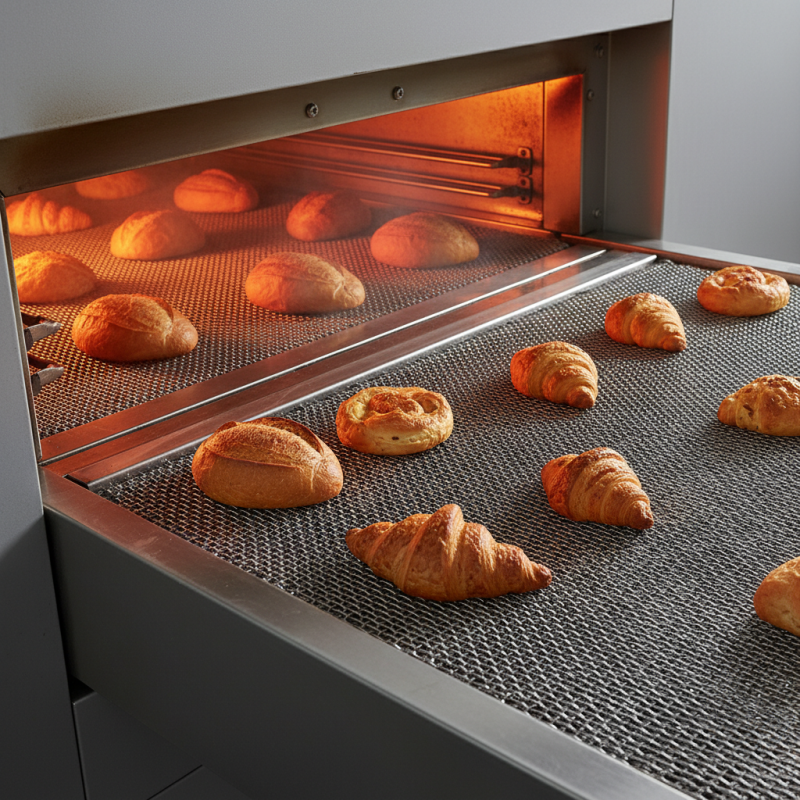
When considering oven mesh belts for industrial use, it's important to understand the different types available. Mesh belts can be made from various materials, such as stainless steel or fiberglass, and each material has unique benefits. Stainless steel offers durability, while fiberglass provides heat resistance. The choice often depends on the specific requirements of the production process.
Another key aspect is belt design. Some mesh belts are designed for specific functions, like conveying fragile items. Others are better suited for high-temperature operations. The right choice can enhance efficiency, but not all designs work seamlessly together. It might require testing to find what truly fits the needs of the operation.
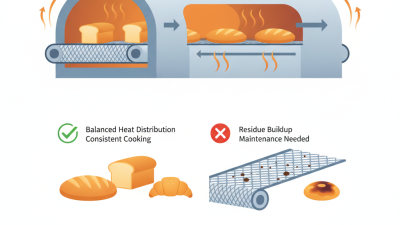
Heat distribution is also an area that merits attention. A poorly designed mesh belt may lead to uneven cooking or drying. This inconsistency can affect product quality. Operators should consider the mesh size too; larger openings can be detrimental for smaller items. Understanding these nuances can lead to better results and smoother operations.
Comparative Analysis of Top Oven Mesh Belt Brands for 2026
As we look ahead to 2026, the demand for high-quality oven mesh belts continues to grow. Many industries rely on these durable belts for efficient baking and production. Several top brands have emerged, each offering unique features and benefits. Examining these options helps us make informed choices.
One significant factor to consider is the material used in the mesh. Some belts incorporate lightweight metals while others utilize advanced polymers. This choice affects heat distribution and longevity. Many users report that certain belts wear faster under high temperatures. It's essential to analyze user feedback for durability over time.
Design also plays a critical role. A well-designed belt should facilitate even airflow. However, achieving this isn't always straightforward. Some users have noted uneven baking with specific brands. While most belts have undergone improvements, refinements can still be made. It’s clear that continuous evaluation is essential for progress in this industry.
What is the Best Oven Mesh Belt for 2026? - Comparative Analysis of Top Oven Mesh Belt Brands for 2026
| Brand |
Material |
Temperature Range (°C) |
Width (mm) |
Strength Rating (kg) |
Price (USD) |
| Brand A |
Stainless Steel |
-20 to 250 |
300 |
100 |
150 |
| Brand B |
Polyester |
-10 to 230 |
250 |
80 |
120 |
| Brand C |
Fiberglass |
-30 to 260 |
400 |
120 |
180 |
| Brand D |
Nylon |
-5 to 200 |
350 |
90 |
140 |
| Brand E |
Silicone |
0 to 300 |
200 |
110 |
160 |
Material Durability and Heat Resistance in Oven Mesh Belts
When considering oven mesh belts for 2026, durability and heat resistance are key factors. The material choice significantly impacts the belt’s lifespan. Belts made from stainless steel or specialized alloys offer high durability. They withstand extreme temperatures and resist corrosion. This ensures they maintain structural integrity over time.
Heat resistance is equally crucial. High temperatures in ovens can cause materials to degrade. Some belts lose their shape or functionality after repeated exposure. It's essential to choose materials designed for high-heat environments. Reinforced mesh belts, for example, can endure fluctuating temperatures. They provide stability throughout the cooking process.
There are always trade-offs in material selection. Some more durable options may be costlier initially. However, they often save money in the long run. Investing in quality can prevent frequent replacements. Yet, it's essential to consider specific needs for each application. Each operation may have different requirements. Reflecting on these factors can lead to better overall choices.
Material Durability and Heat Resistance in Oven Mesh Belts (2026)
Future Trends in Oven Mesh Belt Technology and Design Innovations
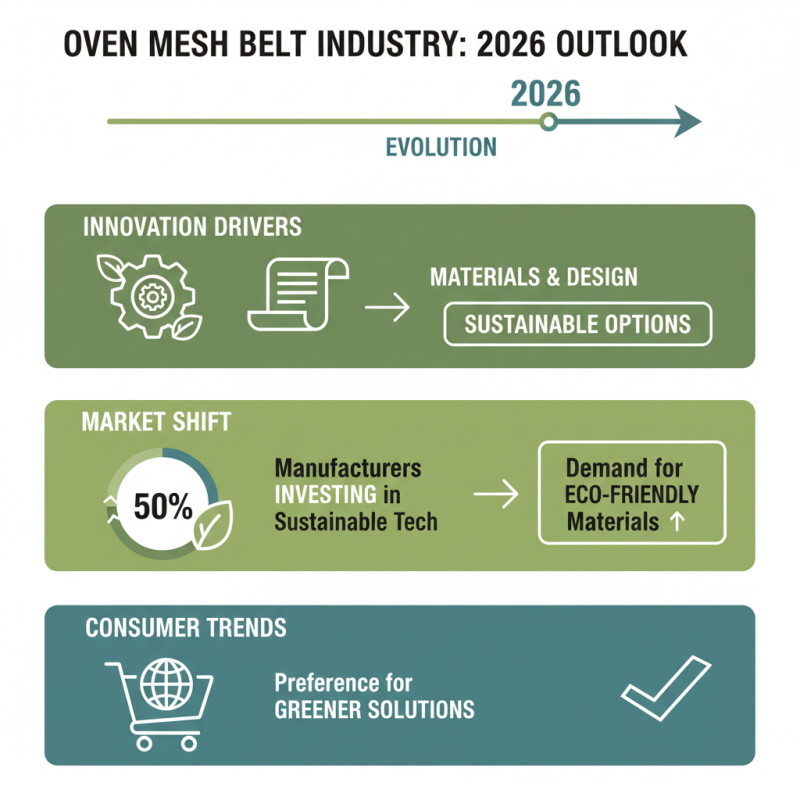
As we approach 2026, the oven mesh belt industry is evolving. Innovation in materials and design is crucial. Recent reports indicate a shift towards more sustainable options. The demand for eco-friendly materials is growing. In fact, around 50% of manufacturers plan to invest in sustainable technologies. This trend reflects consumer preferences for greener solutions.
Technological advancements are also on the rise. The integration of IoT features in oven mesh belts is becoming common. These smart belts can optimize baking processes in real-time. Data from industry studies show that around 70% of users prefer belts with smart analytics. However, the challenge lies in balancing cost and technology. Not all companies can afford these innovations.
Design innovations are key for improved efficiency. For example, adjustable mesh sizes enhance airflow and heat distribution. This improvement can lead to a 25% increase in baking speed. Still, some manufacturers struggle with the implementation. The industry must focus on user training and adaptability. Merging technology and user needs will shape the future of oven mesh belts.