China Top Continuous Furnace Mesh Belt Innovations and Applications?
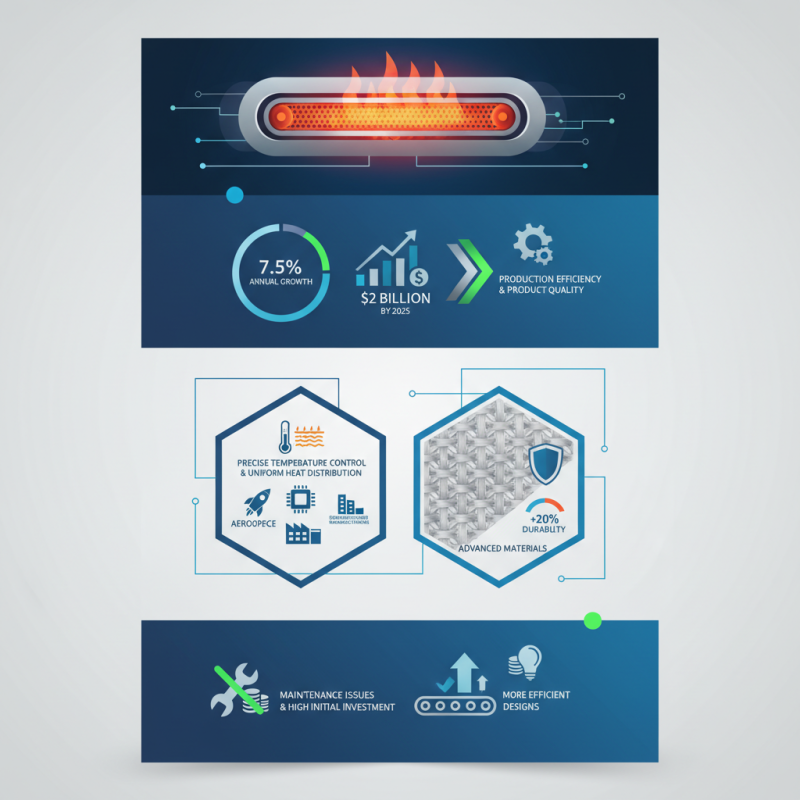
Innovations in Continuous Furnace Mesh Belt technology have significantly transformed the manufacturing landscape in China. According to a recent industry report, the continuous furnace market is expected to grow by 7.5% annually, reaching a valuation of over $2 billion by 2025. This growth underscores the vital role that Continuous Furnace Mesh Belts play in enhancing production efficiency and product quality.
The application of Continuous Furnace Mesh Belts spans various industries, from aerospace to semiconductor manufacturing. These belts provide precise temperature control and uniform heat distribution. For instance, research indicates that the use of advanced materials in mesh belt production has led to a 20% increase in durability. However, challenges remain, such as maintenance issues and initial high investment costs. Companies must balance performance with cost-effectiveness.
Despite these hurdles, Continuous Furnace Mesh Belts remain indispensable in modern production lines. Their ability to withstand extreme conditions has made them a popular choice among manufacturers. Industry experts note that ongoing innovation in this field could lead to even more efficient designs. As the market evolves, Continuous Furnace Mesh Belt technology will continue to redefine industry standards.
Overview of Continuous Furnace Mesh Belt Technology in China
Continuous furnace mesh belt technology has revolutionized manufacturing in China. This innovation is vital for industries needing high-temperature processing. Recent reports indicate that the market for continuous furnaces in China will reach a value of approximately $6 billion by 2025. This growth reflects the increasing demand for efficient heat treatment and metal processing.
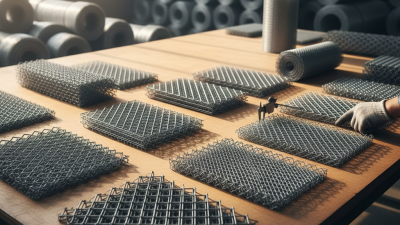
The technology allows for precise temperature control and uniform heating. This feature enhances the quality of processed materials. Mesh belts made from advanced alloys can withstand extreme conditions. However, challenges remain in optimizing belt lifespan and efficiency. Manufacturers report varying results in durability under different operational conditions. Feedback reveals that while some belts excel, others fall short.
Moreover, the integration of smart technologies is becoming more prevalent. Sensors and AI can monitor belt performance in real-time. Such advancements may improve efficiency but require significant investment. As the industry evolves, the balance between innovation and practicality must be assessed. This ongoing reflection can lead to more reliable products that meet market demands.
Innovations in Material and Design of Mesh Belts
The recent innovations in the design and materials of mesh belts for continuous furnaces have transformed industrial processes in China. Recent industry reports indicate that the demand for high-temperature resistant mesh belts has surged by over 25% in the past two years. Manufacturers are now experimenting with advanced alloys that enhance durability and heat resistance. The application of these materials results in reduced wear and extended operational life.
Additionally, the design of mesh belts has evolved significantly. Advanced mesh configurations are now being utilized to improve airflow and heat distribution. Data from market studies reveals that these improvements can increase energy efficiency by up to 15%. However, some manufacturers struggle with the balance between innovation and cost. Embracing new materials often involves higher initial investment, which can deter smaller enterprises.
Flexibility remains a critical aspect of mesh belt innovation. Customized mesh designs can accommodate various products and processes. Some factories have reported challenges in integrating these bespoke solutions into existing systems. This ongoing evolution demonstrates a blend of creativity and practicality. As the industry progresses, continual refinement in both materials and design will be necessary to meet diverse production needs.
China Top Continuous Furnace Mesh Belt Innovations and Applications
| Dimension |
Description |
Innovative Features |
Applications |
| Material |
High-strength stainless steel |
Corrosion resistance, high-temperature endurance |
Food processing, metal part annealing |
| Belt Width |
Customizable from 300 mm to 2000 mm |
Modular design, adjustable for different applications |
Ceramics, automotive parts |
| Temperature Range |
Up to 1200°C |
Effective heat conduction, low thermal expansion |
Metal heat treatment, glass manufacturing |
| Surface Treatment |
Non-stick coating |
Enhanced release properties, ease of cleaning |
Baking industry, electronic components |
| Life Span |
Over 10,000 operational hours |
Durability under continuous use |
Long-term industrial applications |
Key Applications of Continuous Furnaces in Various Industries
Continuous furnaces play a pivotal role across multiple industries. In metallurgy, they are crucial for heat treatment processes. The uniform heating provided by continuous furnaces ensures consistency in the properties of metals. This reliability helps manufacturers produce high-quality products with minimized defects.
In the food industry, continuous furnaces enable efficient cooking and drying processes. They maintain specific temperature profiles, which are essential for food safety and flavor retention. However, balancing energy consumption with output is a challenge that many face. Adjustments in operational parameters can lead to significant variations in energy efficiency.
The ceramic industry also benefits significantly from continuous furnaces. They facilitate controlled sintering, which is vital for producing durable ceramic materials. Though the initial investment can be high, the longevity and efficiency of these systems often justify the cost. Still, ongoing maintenance and potential downtimes require careful planning.
Future Trends and Challenges in Mesh Belt Technology
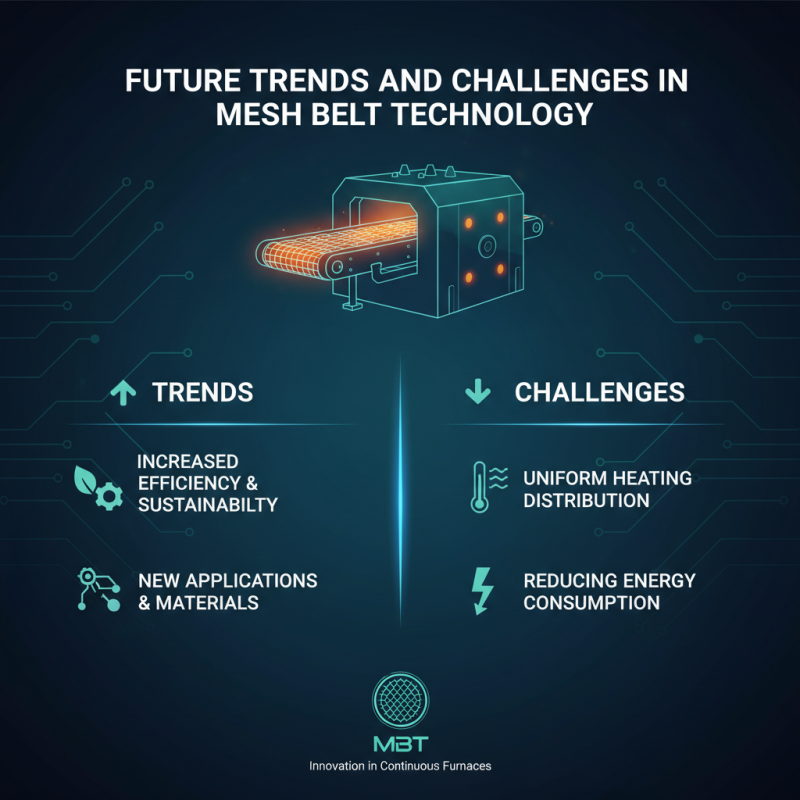
The technology of mesh belts in continuous furnaces is evolving rapidly. This innovation opens new avenues for efficiency and sustainability. As industries demand greater performance, challenges arise. Achieving uniform heating and reducing energy consumption are persistent hurdles.
Future trends suggest the integration of smart sensors for real-time monitoring. These sensors track the belt's condition and temperature. However, the implementation costs may deter smaller companies. The adoption of advanced materials can enhance durability. Yet, selecting the right material requires careful consideration.
In this quest for innovation, user feedback plays a crucial role. Manufacturers often overlook this aspect. Listening to the end-users can reveal insights into practicality. This input helps refine designs, ensuring they meet operational needs. Balancing innovation with reliability remains a challenge. The road ahead involves collaboration and experimentation, pushing the boundaries of what is possible in mesh belt technology.