Leave Your Message

How to Choose Woven Wire Mesh for Your Needs in 2026?

Choosing Woven Wire Mesh in 2026 requires more than comparing prices or counting openings. The correct specification depends on the material being screened, the operating environment, and the expected service life. A mesh used for dry powder behaves differently from one exposed to hot air, moisture, vibration, or abrasive stone.

William S. Tyler, a pioneer in screening technology and founder of W.S. Tyler, offered a practical principle: “Start with the separation problem, not the screen.” That advice still matters. Wire diameter, aperture size, weave pattern, tensile strength, and alloy grade should support the actual application. Stainless steel may suit corrosive surroundings. High-carbon steel may offer better wear resistance. The cheapest option may fail quickly.

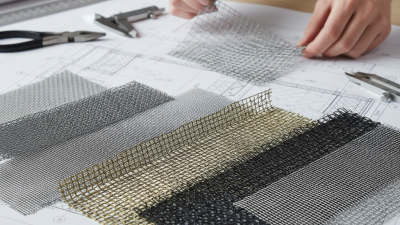
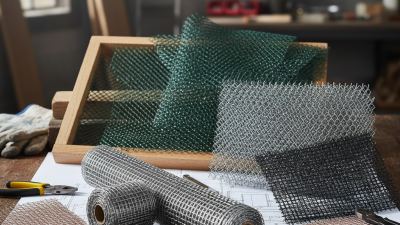
Look closely.

A buyer should also check opening tolerances, edge construction, installation space, and cleaning requirements. Small dimensional errors can change flow rates or product consistency. For food, chemical, and pharmaceutical uses, documentation and traceability deserve equal attention. Product certificates, test records, and supplier experience help reduce uncertainty.

Still, no selection guide can predict every site condition. Real production often includes dust, impact, temperature changes, and hurried maintenance. That is where specifications may need revision. Speaking with a qualified manufacturer and testing a sample panel can reveal weaknesses before full installation. A thoughtful choice is not always perfect. It is measurable, explainable, and suitable for the work ahead.
How to Choose Woven Wire Mesh for Your Needs in 2026?

What Is Woven Wire Mesh and How Is It Made?

Woven wire mesh is a sheet made from interlaced metal wires. Longitudinal wires form the warp. Crosswise wires form the weft. Each wire passes over and under its neighbor, creating a stable, breathable surface. Plain weave is common. Twill weave provides deeper openings and better load support. Dutch weave uses tightly packed wires for fine filtration.

Manufacturing starts with wire drawing, where metal rod passes through dies to reach a controlled diameter. The wire may then be annealed, straightened, and woven on precision looms. Operators check aperture size, wire thickness, and edge tension during production. According to the International Stainless Steel Forum’s 2024 statistics, global stainless steel production reached about 58.4 million tonnes in 2023. That scale supports broad material availability, but it does not guarantee identical mesh quality.

Choose mesh by function, not appearance. Measure the opening, wire diameter, alloy, weave, and required strength. For filtration, aperture tolerance and cleanability matter more than visual uniformity. For guards or screens, impact resistance and corrosion exposure deserve priority. ASTM E2016 provides terminology for metallic industrial woven wire cloth, while ISO 4783-1 supports designation and opening specifications. Ask for a material certificate and inspection report. A shiny finish can mislead. I have seen attractive mesh fail after outdoor exposure because the alloy was unsuitable. Salt, heat, vibration, and cleaning chemicals should be tested before final selection. Even the “standard” choice may need reconsideration.

How to Choose Woven Wire Mesh for Your Needs in 2026? - What Is Woven Wire Mesh and How Is It Made?

},
Woven Mesh Type Basic Weave Pattern Typical Opening Range Typical Wire Diameter Approximate Open Area Key Characteristics Common Applications Selection Priority
Plain Weave Each warp wire passes alternately over and under each weft wire. Approximately 20 µm to 10 mm Approximately 20 µm to 2.0 mm About 25% to 75%, depending on aperture and wire size Simple construction, consistent openings, good dimensional stability, and broad availability. General filtration, screening, laboratory sieving, guards, vents, and separation. Balanced cost, accuracy, and versatility
Twill Weave Each wire passes over or under two or more wires, creating a diagonal pattern. Approximately 20 µm to 1.5 mm Approximately 20 µm to 1.5 mm About 20% to 60% Supports finer openings with relatively heavier wire than plain weave and offers increased strength. Fine filtration, pressure-supported screens, mineral processing, and chemical processing. Fine openings with higher mechanical load
Dutch Weave Warp and weft wires use different diameters or spacing; the weft is commonly finer and more closely spaced. Approximately 5 µm to 300 µm Approximately 30 µm to 1.0 mm Typically about 10% to 40% High retention capability, strong filter cloth, and lower permeability than open screening meshes. Hydraulic filtration, polymer filtration, fuel filtration, and high-pressure process filters. Particle retention and pressure resistance
Plain Dutch Weave Plain interlacing with a heavier warp and finer, closely spaced weft wires. Approximately 5 µm to 250 µm Approximately 30 µm to 0.8 mm Typically about 10% to 35% Produces a smooth filtering surface and precise retention of fine particles. Fine liquid filtration and applications requiring stable filter media. Fine filtration with a relatively smooth surface
Twill Dutch Weave Twill interlacing combined with closely spaced, fine weft wires. Approximately 3 µm to 200 µm Approximately 20 µm to 0.8 mm Typically about 8% to 30% High strength and high filtration precision; can accommodate heavier wires than plain Dutch weave. High-pressure filtration, demanding process separation, and specialized filter elements. Maximum retention and mechanical strength
Reverse Dutch Weave Uses a relatively fine warp and heavier, more widely spaced weft wires. Approximately 10 µm to 300 µm Approximately 30 µm to 1.2 mm Typically about 10% to 40% Strong support structure, good resistance to pressure and backwashing, and improved service durability. Extrusion screens, melt filtration, and applications requiring repeated cleaning. Backwashability and service life
Square Mesh Usually a plain or twill weave with approximately equal opening dimensions in both directions. Approximately 25 µm to 10 mm Approximately 25 µm to 2.0 mm About 30% to 80% Provides predictable particle sizing and straightforward inspection of aperture dimensions. Particle classification, sieving, screening, and protective barriers. Accurate separation by particle size
Crimped Woven Mesh Wires are pre-crimped before weaving to improve interlocking and shape retention. Approximately 1 mm to 100 mm Approximately 1 mm to 12 mm About 35% to 85% Rigid, load-bearing, and suitable for larger openings and heavier-duty screening. Quarry screening, aggregate separation, architectural panels, and machine guards. Structural support and impact resistance

Note: The ranges shown are typical industry reference values rather than universal limits. Actual performance depends on material grade, wire diameter, aperture size, weave accuracy, surface treatment, operating temperature, pressure, and corrosion conditions.

Which Woven Wire Mesh Materials Fit Your Application?

Material selection decides whether woven wire mesh survives real service conditions.

Stainless steel suits food processing, filtration, outdoor screens, and humid environments. It resists corrosion without a separate coating. The International Stainless Steel Forum reported 58.4 million tonnes of global crude stainless steel production in 2023, showing its broad industrial relevance. Choose 304 for general exposure. Choose 316 when chlorides or coastal air create greater risk. It costs more.

Galvanized carbon steel fits agricultural guards, ventilation panels, and general structural screening. Its zinc layer offers practical protection at a lower initial price. The U.S. Geological Survey reported approximately 13 million tonnes of refined zinc production worldwide in 2023.

However, cutting or bending can damage the coating. That detail is easy to overlook. Inspect exposed edges carefully.

Copper and brass provide electrical conductivity, thermal transfer, and distinctive appearance. Copper mesh can support electromagnetic shielding, while brass offers better stiffness and color stability. USGS data recorded about 22 million tonnes of mined copper production in 2023.

For high heat, chemical exposure, or unusual pressure, nickel alloys may perform better than common metals. They also demand careful budgeting.

Polyester and other polymer meshes work well for lightweight filtration and separation, but ultraviolet exposure can shorten their service life.

My practical mistake was comparing only wire diameter and opening size. Temperature, cleaning chemicals, contact with dissimilar metals, and maintenance access matter just as much.

Test a small sample first.

How to Select Mesh Size, Wire Diameter, and Weave Pattern

How to Choose Woven Wire Mesh for Your Needs in 2026?

Selecting woven wire mesh starts with the required opening size. Mesh size describes the number of openings per linear inch, while aperture shows the actual gap. A 100-micron opening may suit fine filtration, but it can restrict flow quickly. Larger openings improve drainage and air movement. Measure the material you need to retain, not only the particle size listed on a drawing. Real particles are rarely perfectly round.

Wire diameter affects strength, weight, and available open area. Thicker wire handles vibration, abrasion, and repeated cleaning better. However, it reduces the opening and may increase pressure loss. Use a caliper to verify the diameter, especially when mesh will support heavy loads. In field inspections, I have seen small diameter differences change performance noticeably. That detail is easy to overlook.

The weave pattern should match the working conditions. Plain weave offers balanced stability for general screening and filtration. Twill weave can provide smaller openings with stronger, smoother wires. Dutch weave supports fine filtration, although it may need careful cleaning. Ask for aperture tolerance, material grade, tensile data, and a test sample. Check the sample under actual flow, temperature, and cleaning conditions.

It may fail. That is useful information. A specification can look precise yet miss the pressure, wear, or handling problems found during operation. Recheck your choice before ordering a large quantity.

How to Match Woven Wire Mesh to Operating Conditions

How to Choose Woven Wire Mesh for Your Needs in 2026?

Matching woven wire mesh to operating conditions starts with the material surrounding it. Stainless steel suits humid areas and many corrosive environments. Carbon steel can provide strength where moisture is controlled. Nickel-based alloys may perform better under severe heat or chemical exposure. However, material selection should follow actual temperature, chemical concentration, and cleaning methods. A mesh that survives dry operation may weaken after repeated washing.

Opening size controls separation, while wire diameter affects strength and service life. Fine openings can improve filtration, but they may clog quickly when dust or sticky particles are present. Larger openings allow easier flow and cleaning. In vibrating equipment, consider fatigue, tension, and edge support. During site inspections, I check for stretched wires, polished wear marks, and blocked openings. These details often reveal more than a specification sheet.

Small details matter.

Abrasion requires a durable surface and suitable wire thickness. High temperatures require checking both the wire alloy and the surrounding frame. Corrosion testing should reflect real process fluids, not only generic laboratory solutions. Ask for traceable material records, dimensional inspection results, and application-based test data. A perfect specification on paper can still fail during installation. I have seen premature damage caused by poor tension rather than weak mesh. That possibility deserves attention. Recheck the operating conditions after production changes, because the best mesh choice can change with them.

How to Match Woven Wire Mesh to Operating Conditions in 2026

Compare approximate continuous service-temperature capabilities when selecting woven wire mesh materials. Actual limits depend on wire diameter, mesh construction, atmosphere, load, and exposure time.

Galvanized steel is generally suited to lower-temperature dry environments, while 304 stainless steel offers general corrosion resistance. 316 stainless steel is commonly preferred for humid or chloride-containing conditions, and 310 stainless steel is designed for higher-temperature service. Verify the final selection against the manufacturer’s technical data and the complete operating environment.

How to Compare Quality, Cost, Standards, and Suppliers

How to Choose Woven Wire Mesh for Your Needs in 2026?

Quality starts with measurable details, not polished photographs. Check material grade, wire diameter, aperture size, mesh count, weave pattern, and opening tolerance. ISO 9044 defines industrial woven wire screening requirements, while ASTM E2016 covers stainless steel wire cloth. These standards help you compare equivalent products. Ask for a mill test certificate, batch number, and inspection report. Measure a sample with a calibrated gauge. Small errors become serious when filtration depends on a 100-micron opening.

Cost needs a wider view. Compare the landed price, usable area, packaging, freight, duties, and likely rejection rate. World Steel Association data recorded about 1.88 billion tonnes of crude steel production in 2024, showing the scale of a highly competitive raw-material market. However, steel volume does not guarantee stable mesh pricing. Alloy content, drawing quality, weaving time, and order quantity still matter. Request at least three comparable quotations with identical specifications. A cheap roll may contain excessive edge damage or inconsistent tension. That is not savings.

Supplier reliability is harder to measure. Review production capacity, calibration records, corrective-action history, and delivery performance. Require a pre-shipment sample for critical applications. Visit the facility when the project justifies it. I would not trust a certificate alone; documents can be complete while inspection remains weak. Also, leave room for doubt. A first approved sample does not prove every future batch will match. Clear acceptance criteria protect both sides.