How to Choose the Best Transport Belt for Your Needs?
Choosing the right transport belt is crucial for efficiency. According to recent industry reports, about 85% of manufacturing processes rely on transport belts. This statistic highlights their importance in various sectors, from food processing to automotive assembly.
Different applications demand different belt specifications. For example, belts used in heavy-duty machinery require higher tensile strength. Conversely, belts in food handling must comply with strict hygiene regulations. Each choice influences productivity and safety.
However, many businesses struggle with their selections. They often underestimate the impact of material, width, and even belt surface. A wrong choice can lead to costly downtimes. It's essential to address these challenges to optimize operations. The right transport belt could be a game changer.
Understanding the Different Types of Transport Belts Available
When choosing a transport belt, it's essential to understand the different types available. There are flat belts, modular belts, and conveyor belts. Each type has unique features and applications. Flat belts are versatile and widely used. They can handle light to moderate loads efficiently. Modular belts offer flexibility in design. They are ideal for complex layouts. Conveyor belts are robust and suited for heavy-duty tasks.
Consider the specific requirements for your business. Material, weight capacity, and environment all matter. For instance, food-grade belts are essential in the food industry. They must resist bacteria and be easy to clean. In contrast, industrial environments may require belts that withstand extreme temperatures or chemicals. Reflect on your production flow, too. A poorly chosen belt can cause delays and increase costs.
Maintenance is another factor worth pondering. Some belts require regular adjustments or replacements. Others are more durable and low-maintenance. Think about life expectancy and overall cost when making your choice. Choosing the right transport belt is not as straightforward as it seems. Mistakes can lead to operational issues. Therefore, take the time to research and contemplate your options carefully.
How to Choose the Best Transport Belt for Your Needs?
| Type of Transport Belt |
Main Material |
Load Capacity (kg) |
Length Range (m) |
Ideal Applications |
| Steel Cord Belt |
Steel |
3000 |
10 - 30 |
Mining, Heavy Industry |
| PVC Belt |
PVC |
500 |
5 - 15 |
Food Processing, Light Manufacturing |
| Rubber Belt |
Rubber |
1000 |
8 - 20 |
Agriculture, Construction |
| Modular Belt |
Plastic |
300 |
3 - 12 |
Packaging, Bottling |
| Fabric Belt |
Polyester |
200 |
2 - 10 |
Textile, Light Goods |
Evaluating Load Capacity and Material Requirements for Transport Belts
When selecting a transport belt, load capacity is a critical factor. Different applications demand different capacities. A report from the Conveyor Equipment Manufacturers Association indicates that load capacities can range from a few pounds to several tons. Lightweight belts suit smaller packages, while heavy-duty options handle larger bulk transport.
Material choice is equally important. Transport belts come in various materials like rubber, PVC, and metal. Rubber belts are flexible and durable, ideal for various environments. In contrast, PVC belts resist chemicals and moisture, making them suitable for food processing. According to industry experts, about 30% of transport belt failures stem from improper material selection. Selecting the right material can extend the belt's lifespan and improve efficiency.
Regular assessment can help optimize choices. Over time, wear and tear may reduce capacity. Monitoring belt performance can reveal trends that prompt adjustments. However, many overlook this aspect, leading to inefficiencies. Inadequate load capacity can result in breakdowns or accidents, causing delays. It's vital to balance capacity and material needs to ensure safe and effective transport.
Load Capacity and Material Requirements for Transport Belts
Assessing the Environment and Conditions for Belt Usage
When selecting a transport belt, the environment plays a crucial role. Factors like temperature, humidity, and exposure to chemicals can significantly affect performance. A 2021 industry report indicated that improper environment assessment led to a 15% increase in maintenance costs. This highlights the importance of understanding the conditions in which a belt will be used.
Consider the temperature range where the belt will operate. Some materials can become brittle in low temperatures, while others may degrade under heat. Humidity can cause rubber belts to swell, affecting their lifespan. Moreover, exposure to harsh chemicals can compromise certain fabric materials. In a warehouse where conditions fluctuate, the risk of premature belt failure increases. A thorough analysis of your specific usage environment is essential.
You might think all belts are interchangeable, but that’s a misconception. Different settings require tailored belt selections. Sometimes a cheaper option seems appealing, but unsuitable materials lead to costly downtime. Remember, the belt's longevity and efficiency are only as good as the environment it operates in. Taking the time to assess conditions truly impacts your operational success.
Considering Cost and Maintenance Factors for Transport Belts
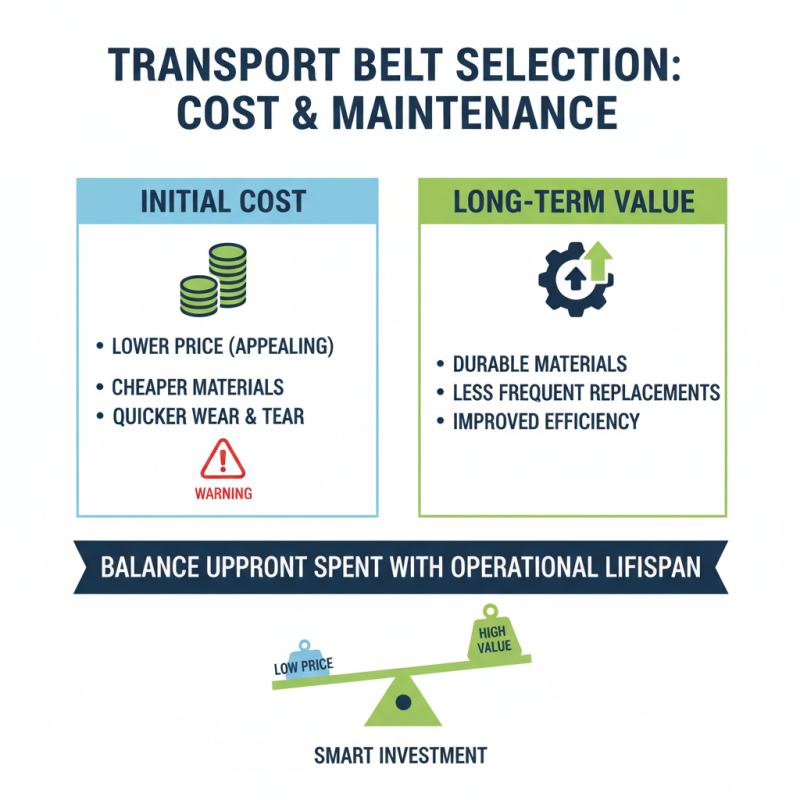
When selecting a transport belt, cost and maintenance are key factors. A lower initial cost might seem appealing, but hidden expenses can accumulate over time. Cheaper materials may wear out faster, leading to frequent replacements. Additionally, poor performance can affect overall efficiency. Balancing upfront costs with long-term value is crucial.
Maintenance is another critical element. Some belts require regular lubrication and tension adjustments. Neglecting these can result in breakdowns. In contrast, other types may have minimal maintenance needs but a higher purchasing cost. Consider your operational environment as well. Dusty or wet conditions may demand more robust options. Reflecting on your specific needs can help guide your choice effectively.
Choosing the Right Belt Length and Width for Your Specific Application
Choosing the right belt length and width can significantly impact your operation's efficiency. According to industry reports, a mismatch in belt dimensions can lead to material handling issues. An ideal belt length should ensure smooth transport without excess slack. Experts suggest that a length within 10-15% of the distance between pulleys is optimal.
Width consideration is equally crucial. Wide belts can manage larger loads but may be overkill for lighter materials. A study by the Material Handling Industry of America noted that a 12-inch belt is suitable for medium loads, while a 24-inch belt is recommended for heavier materials. However, using a wider belt than necessary may waste resources and increase operational costs.
It’s also vital to consider the environment where the belt will operate. Temperature fluctuations and exposure to chemicals can wear down belts more quickly. Regular assessments can highlight these issues. Whether to prioritize length or width ultimately depends on your specific application, but clear criteria must guide your choice. Balancing functionality and cost-effectiveness can make the selection process daunting.