How to Choose the Right Industrial Belting for Your Needs?
Choosing the right industrial belting can be a critical decision. Industrial belting plays a vital role in various manufacturing processes. Selecting the best options can enhance efficiency and productivity.
Different types of industrial belting serve unique purposes. Materials can vary from rubber to fabric. Each type offers distinct advantages and potential drawbacks. The choice depends on specific operational demands. For example, some belts handle heavy loads well, while others provide flexibility. Understanding these factors is crucial.
Reflecting on past experiences can be enlightening. Sometimes, choices were made without considering all aspects. Careful evaluation can lead to better decisions. It's essential to research and seek advice. The right industrial belting can make a significant difference in performance.
Basics of Industrial Belting: Types and Applications
Industrial belting is crucial in various applications. Different types cater to unique requirements. Selecting the right belt can be challenging. Understanding the basics helps in making informed decisions.
There are many types of industrial belts. For example, flat belts are commonly used in light-duty applications. They work well in moving lightweight materials. On the other hand, V-belts are ideal for heavy loads. They provide friction and grip. Timing belts are essential for synchronized movements. Each type has its strengths and weaknesses.
Tips: When choosing a belt, consider the load and speed. Evaluate the environment where the belt will operate. Humidity and temperature can impact performance. Ensure the belt matches your machinery specifications. Also, consider the maintenance needs. Some belts require more care than others. It's essential to reflect on these factors for a smooth workflow. Don't rush the decision; take your time.
Understanding Load Capacity and Belt Strength Requirements
When selecting industrial belting, understanding load capacity is essential. Load capacity refers to the maximum weight the belt can support. Overloading can lead to premature wear. It can also cause severe safety hazards. Each application has different requirements. Knowing the specific needs of your operation is vital.
Belt strength is another critical factor. It is determined by material, thickness, and weave. A stronger belt can handle more strain. However, this often results in higher costs. Balancing the right strength with your budget can be challenging. Sometimes, a lighter belt might suffice, especially for less demanding tasks. Test different materials to see what works.
Remember, not every choice is perfect. Some belts may perform well but wear out quickly. Others might last long but not meet your needs. Reflect on past experiences to make informed decisions. Constant evaluation will help ensure you choose the best belt for your operations.
Industrial Belting Load Capacity vs. Belt Strength
This chart illustrates the relationship between load capacity and belt strength requirements for different types of industrial belts. The data reflects common specifications that can guide users in selecting the appropriate belting for their operational needs.
Material Selection: Rubber, PVC, and Specialty Belts Explained
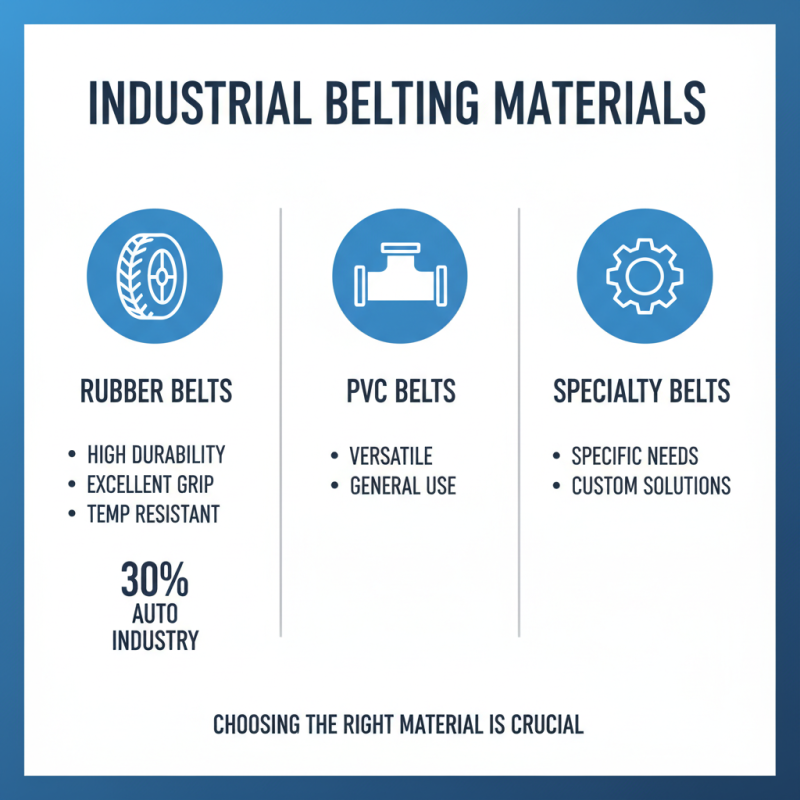
Choosing the right material for industrial belting is crucial. Rubber, PVC, and specialty belts each serve different purposes. Rubber belts are widely used due to their high durability. They provide excellent grip and can withstand extreme temperatures. In industries like automotive, rubber belting accounts for about 30% of material usage.
PVC belts are lighter and more economical. They are ideal for less demanding applications, especially in food processing. A recent report noted that PVC belts have seen a 20% increase in market share over the past two years. However, they may not perform well in high-stress environments.
Specialty belts fill specific needs, with advanced materials designed for unique applications. These can include oil resistance or static dissipation. Data indicates that specialty belts enhance efficiency by up to 25% in niche industries. Customers should analyze their particular environment and needs to avoid making an incorrect choice. Selecting a belt without understanding its properties can lead to increased downtime.
Evaluating Environmental Factors: Temperature, Moisture, and Chemicals
When choosing industrial belting, environmental factors play a significant role. Temperature affects the material's flexibility and durability. High heat can cause some belts to warp or lose their strength. In contrast, extreme cold can make them brittle. It's important to know the typical temperature range in your working environment. Testing the belting under these conditions can reveal potential weaknesses.
Moisture is another critical factor. Wet environments can lead to mold growth or degradation of certain materials. Belts designed for dry conditions may not hold up in humid setups. Consider using moisture-resistant options in areas prone to spills or condensation. Proper storage methods can also mitigate risk.
Chemical exposure cannot be ignored. Certain substances can corrode or break down materials over time. It’s essential to identify which chemicals the belt might encounter. Regular inspections can help detect signs of wear or damage. Adapting to these challenges can be complex but crucial for your operations.
Maintenance Best Practices for Longevity and Performance
Maintaining industrial belting is crucial for optimal performance and longevity. Regular inspections should be part of your routine. Look for signs of wear, such as fraying or cracking. It’s essential to clean belts regularly. Dust and debris can hinder performance and shorten lifespan.
Proper tensioning is another key aspect. Belts that are too tight can wear out quickly. Conversely, if they are too loose, they may slip. Adjusting tension based on manufacturer guidelines is vital. However, these guidelines can be overlooked. Many operators may skip this step, thinking it's unimportant.
Lubrication is also critical, but not everyone applies it correctly. Over-lubricating or using the wrong type can cause slippage. Also, ensure that pulleys and rollers are aligned properly. Misalignment can lead to premature belt failure. These details matter, yet they are often neglected in busy operations. Keeping a checklist can help maintain focus on these critical practices.