2026 How to Choose the Right Industrial Conveyor Belt for Your Business?
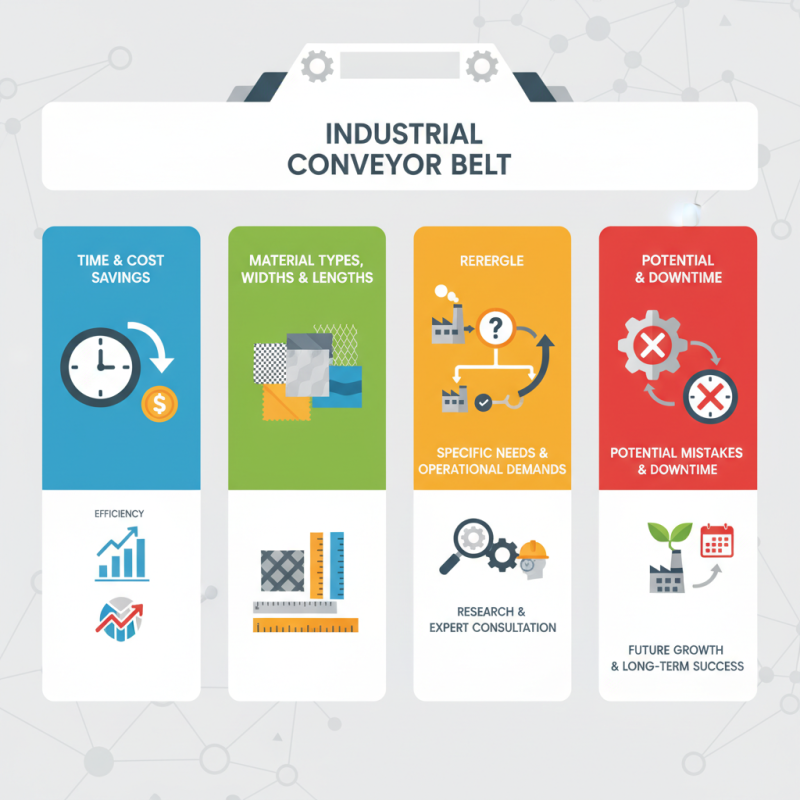
Choosing the right industrial conveyor belt is critical for any business. According to industry expert John Smith, "The right conveyor belt can save time and reduce costs." This highlights the importance of making an informed decision.
In the diverse landscape of the industrial conveyor belt industry, various factors come into play. Material types, widths, and lengths can vary significantly. Each option affects efficiency and productivity in unique ways. Businesses must consider their specific needs and operational demands.
Selecting an industrial conveyor belt is not always straightforward. Mistakes in choice can lead to inefficiencies and downtime. Understanding the ideal specifications requires research and sometimes expert consultation. Business owners should evaluate their processes thoroughly and consider potential future growth. The right choice isn’t just about immediate needs; it’s about long-term success.
Understanding the Different Types of Industrial Conveyor Belts
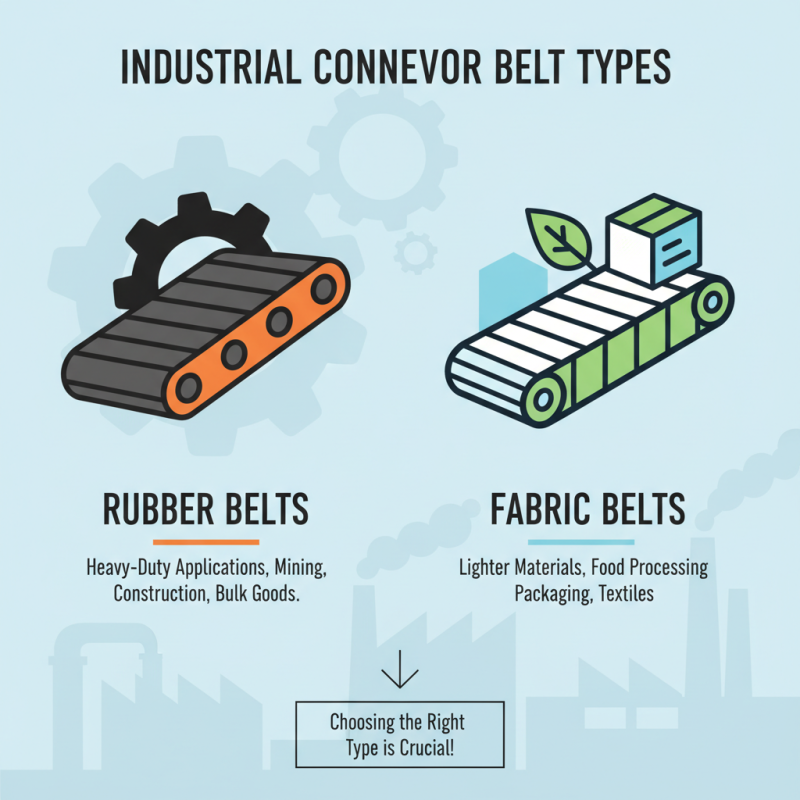
When selecting an industrial conveyor belt, understanding the various types is crucial. Conveyor belts come in many forms. Each type serves different functions and industries. For instance, rubber belts work well in heavy-duty applications. In contrast, fabric belts may suit lighter materials and processes.
It's essential to match the belt type to your specific needs. Consider the materials you will transport. Some belts resist chemicals well, while others excel in high temperatures. Not every belt fits all industries. Pay close attention to these details. Mistakes in selection can lead to inefficiencies. Belts that wear too quickly or slip can disrupt operations.
Additionally, think about maintenance. Some belts require regular inspections. Others may need more downtime for care. Your choice affects overall productivity. Evaluate the costs over time, not just upfront expenses. The right belt should align with your long-term goals. This process may seem tedious, yet careful consideration is necessary.
Evaluating the Material Requirements for Conveyor Belts
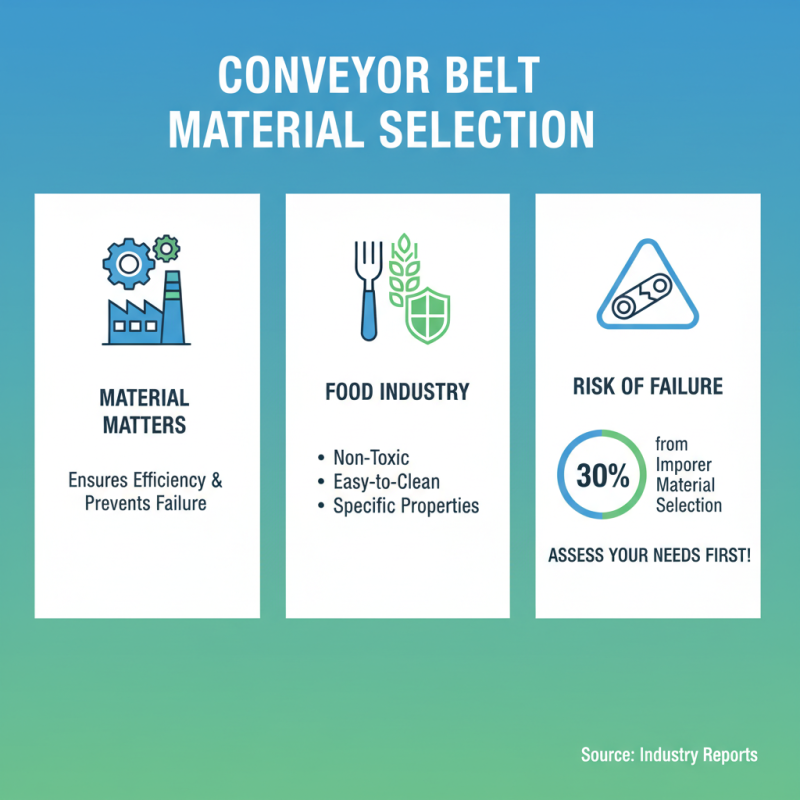
When choosing the right conveyor belt, material requirements play a critical role. Different industries demand specific material properties to ensure efficiency. For instance, the food industry requires belts made from non-toxic materials that are easy to clean. According to recent industry reports, 30% of belt failures result from improper material selection. This means assessing your needs is crucial before making a choice.
Moreover, consider the environment where the conveyor belt will operate. Will it face extreme temperatures or chemical exposure? Many manufacturers overlook this aspect. A belt that works well at room temperature may degrade in harsh conditions. Industry analysis suggests that nearly 60% of companies experience productivity losses due to unsuitable materials. It's essential to calculate load capacities, friction levels, and wear resistance as part of your evaluation.
Finally, consult with experts in material science. They can provide insights into the latest advancements in conveyor belt technology. Understanding these factors helps companies avoid common pitfalls. Poor selection not only costs money but can also lead to labor issues. Companies should reflect on their current operations and future needs.
Determining the Ideal Belt Width and Length for Your Operation
Choosing the right belt width and length is crucial for efficiency. The ideal belt width affects product flow and overall performance. A belt that is too narrow may not support heavy loads. Conversely, a belt that is excessively wide can lead to waste and unnecessary costs.
When determining belt length, consider the layout of your operation. Measure the distance between the pulleys and any turns the belt must navigate. Too short a belt will cause slippage, while a belt that is too long may require excess tension. Each situation is unique and can require adjustments. Testing and refinement are often necessary.
Additionally, think about the materials you will transport. Heavier or bulkier items may need wider, more robust belts. Reflect on your production rates and operational demands. Regularly review and adapt your belt specifications to meet evolving needs. Even small miscalculations can lead to issues down the line.
2026 How to Choose the Right Industrial Conveyor Belt for Your Business? - Determining the Ideal Belt Width and Length for Your Operation
| Application |
Ideal Belt Width (inches) |
Ideal Belt Length (feet) |
Material Type |
Load Capacity (lbs) |
| Packaging |
24 |
50 |
PVC |
200 |
| Food Processing |
30 |
40 |
Rubber |
150 |
| Mining |
42 |
70 |
EPDM |
500 |
| Automotive Manufacturing |
36 |
60 |
Nylon |
300 |
| Textile |
24 |
55 |
Polyester |
180 |
Assessing Load Capacity and Weight Considerations for Conveyors
When choosing an industrial conveyor belt, load capacity and weight considerations play a critical role. Studies show that the load capacity directly impacts efficiency and safety in operations. For instance, conveyor systems typically support loads ranging from 500 to 20,000 pounds. It's essential to assess the expected load and the belt's capability. An overloaded conveyor can lead to mechanical failure, downtime, and increased maintenance costs.
Consider the weight of products being transported. Heavier loads require sturdier belts. Choosing the right belt can enhance operational efficiency. According to a report by the Conveyor Equipment Manufacturers Association, 63% of conveyor-related issues stem from miscalculating load needs. This underscores the importance of accurately assessing both dynamic and static loads.
**Tip:** Always calculate the total weight, including dynamic forces during operation. This can prevent costly mistakes. Another consideration is the type of materials being transported. Some belts perform better with specific materials. Reflecting on these factors can help avoid future headaches. Balancing load capacity with operational needs can significantly enhance productivity. Make informed choices for sustainable growth.
Load Capacity of Different Conveyor Belt Types
This chart illustrates the load capacity of various types of industrial conveyor belts, which is a crucial consideration when choosing the right conveyor for your business needs. Proper assessment of load capacity helps ensure that the selected conveyor belt will perform effectively for your specific applications.
Choosing the Right Accessories and Features for Enhanced Performance
When selecting industrial conveyor belts, integrating the right accessories is crucial. Choosing the correct features can significantly improve performance and efficiency. According to industry experts, around 70% of conveyor system failures are linked to inadequate accessories. Therefore, understanding these components is vital.
Belts should be evaluated based on the type of materials they will transport. For instance, using the wrong type of pulley could lead to wear and tear. Additionally, installing sensors can enhance monitoring. A report from the Conveyor Equipment Manufacturers Association indicates that companies utilizing advanced sensors saw a 30% reduction in downtime. Yet, many businesses overlook these enhancements, risking higher operational costs.
The belt's environment matters, too. Dusty or wet conditions require specialized materials. However, many organizations fail to assess their settings properly. They might choose a standard belt, leading to rapid degradation. Regular reevaluation of accessories is also essential for sustained performance. Neglecting this can lead to unexpected failures. Recognizing the need for improvement can drive better decisions.